

Ear piercings are the most socially accepted. Less popular than helix, tragus, or conch piercings, the rook piercing offers a rather unique design.
Pain, healing, price… we'll discuss everything you need to know about the rook piercing
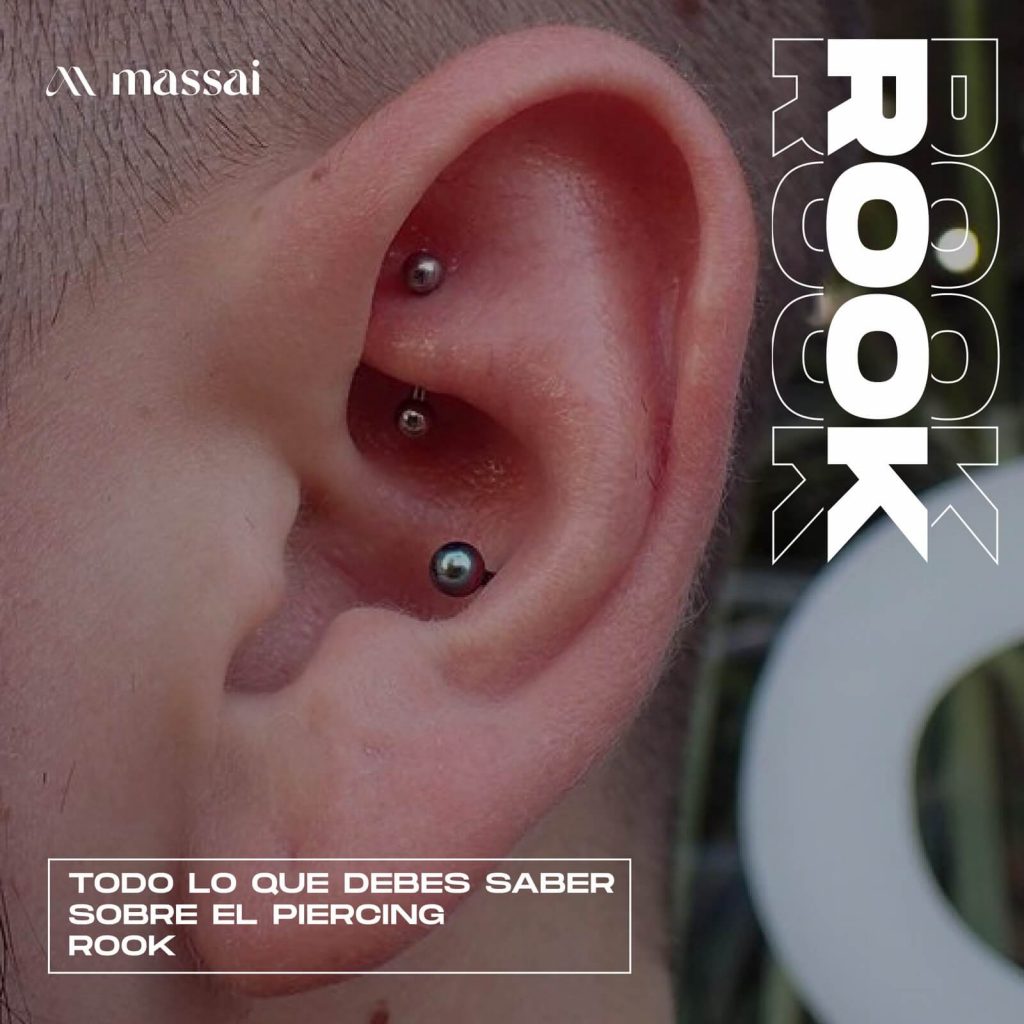
What is a Rook Piercing?
The rook piercing is a piercing of the upper part of the inner ear. It goes through the fold of the large cartilage located in the antihelix and above the tragus.
Performing a Rook piercing is quite complex. It requires great skill from the piercer. Therefore, it is advisable for a rook piercing to be done by an experienced and licensed professional.
The rook piercing takes its name from the piercer who created it in 1992: Eric Dakota. "Rook" was, in fact, his nickname at the time.
Rook Piercing Healing
Generally, a rook piercing takes between 3 and 6 months to heal. In some cases, the piercing can take up to 12 months to heal completely.
How to Make a Rook Piercing Heal?
To facilitate the healing of your rook piercing, we have brought you some good practices to adopt:
- Do not touch the piercing without disinfecting your hands first.
- Disinfect the piercing at least twice a day.
- Avoid taking aspirin or any anticoagulant medication during the first few days after the piercing.
- Protect your piercing when applying hair care products.
- Avoid wearing accessories that may put pressure on the piercing (caps, hats, headphones, earbuds).
- Do not sleep on the side where the piercing is located.
- Avoid public water (pool, sauna).
Additionally, rook piercings close very quickly. Therefore, it is important to avoid removing the initial jewelry before it has completely healed.
Does a Rook Piercing Hurt?
The pain experienced during piercing varies from person to person. The cartilage in this area is very thick, so a rook piercing can be painful.
Generally, the ear turns red and may swell slightly for a few days. You may also feel a warm sensation in the ear.
Rook Piercing Care
Since it takes a long time to heal, it's important to take care of your rook piercing.
How to Change a Rook Piercing?
For this type of piercing, it is important to wait until the healing process is complete before changing the jewelry. It is highly recommended to have the first change done by your piercer during a check-up.
If, after 6 months, you find that the wound has healed sufficiently, you can replace the jewelry yourself. You can clean your piercing with a saline solution before starting the replacement process.
Then, unscrew one of the ends of the piercing. Slide the jewelry bar out of the hole. Clean the piercing and the new jewelry again. Finally, immediately insert the new jewelry and screw it back on.
Piercers often use a Banana piercing to promote good healing after piercing.
Later, you can replace it with a hoop or a Banana piercing. A Rook piercing usually has a thickness of 1.2 mm and a length of 7 to 8 mm if it is a curved bar. For a hoop, the thickness varies between 1.2 and 1.6 mm and the diameter is 8 mm.
To promote the complete healing process of the piercing, the material of your new jewelry can be titanium.
At Massai Body Piercing, we have titanium jewelry, the best material for Rook piercings.
How to Disinfect and Clean a Rook Piercing?
The process of cleaning a Rook piercing is the same as for a daith. After thoroughly washing your hands with soap and water, you should:
Gently clean the piercing with a saline solution or a mild antibacterial soap,
Be sure to remove lymphatic concretions (yellowish scabs) with a compress,
Rinse with warm water and dry,
Apply a little saline solution (gently move the jewelry) and let it dry.
Only during the first two weeks after piercing, you can apply an antiseptic solution to the piercing to limit the risk of infection.